Fresno does not get much of a warning. One week you are running the AC, and the next the first chilly night rolls in off the Valley floor and everyone flips the heat on at the same time. That is often when a neglected furnace gives up, and every HVAC company in town gets slammed. Knowing the signs your furnace needs repair lets you act early, before the cold snap and before the wait times grow. If any of these signs sound familiar, our furnace repair service can inspect it before you really need it.
Why Fall Is the Time to Check Your Furnace
Your furnace sat idle for months. Dust settled on the burners, small parts aged and filters got clogged during the summer. The first real use of the season is when hidden problems show up. In the Central Valley, that first chilly stretch often arrives in late October or November, followed soon by tule fog season with its cold, damp mornings.
Catching problems now has clear benefits:
- You avoid a no heat emergency on the coldest night
- Smaller repairs cost less than big breakdowns
- Appointments are easier to get before the rush
- A safe system protects your family from fumes and fire risks
Here are the seven signs that your furnace needs repair.
1. Weak Airflow From the Vents
Hold your hand over a vent when the heat is on. If the air barely trickles out, something is wrong. Weak airflow can come from a clogged filter, a failing blower motor, blocked or collapsed ducts or leaks in the duct system.
Start with the simplest fix and replace the filter. If the airflow is still weak, stop using the system and have a technician look at it. A struggling blower overheats, and poor airflow can damage the heat exchanger, which is among the most expensive furnace parts.
2. Uneven Heat From Room to Room
If some rooms feel warm while others stay cold, your furnace needs repair or the ducts need attention. This one has its own guide, so see our post on a furnace not heating evenly for the details on airflow fixes.
3. Rising PG&E Bills
Your gas and electric bills tell a story. If your PG&E bill climbs while your habits and the weather stay the same, the furnace may be working harder to deliver the same heat. Dirty burners, a worn blower, leaky ducts or an aging motor all waste energy.
Compare this winter’s bills to last winter’s. A jump of 15 to 20 percent with similar weather is worth a call. The ENERGY STAR page on seasonal tune up tips explains how regular maintenance keeps equipment efficient.
4. Yellow or Flickering Burner Flames
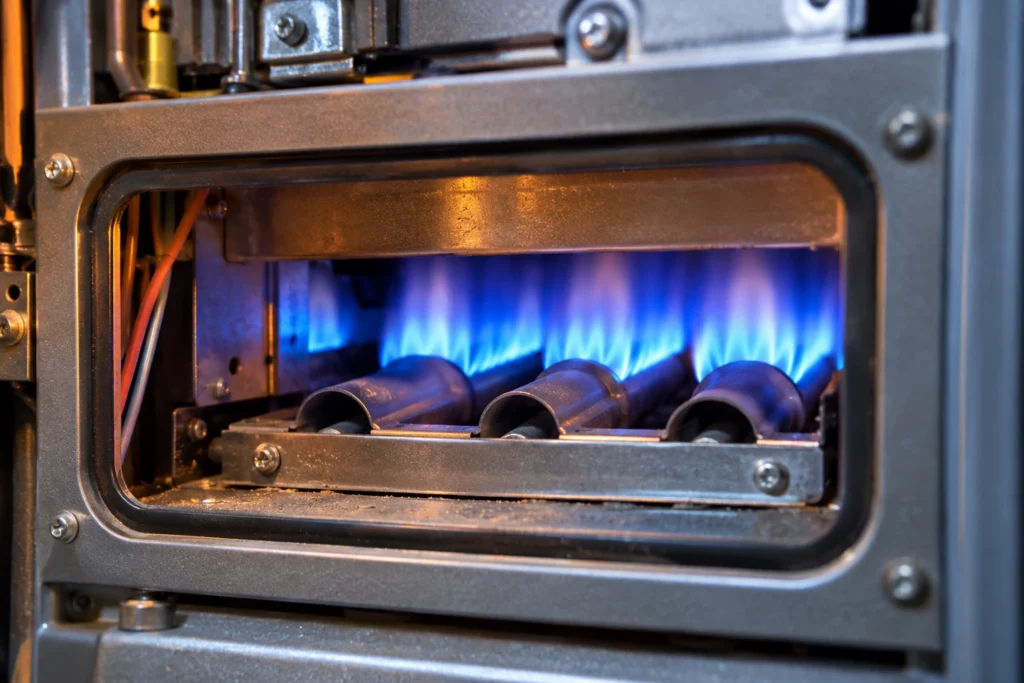
A healthy gas furnace burns with a steady blue flame. A yellow, orange or flickering flame is a red flag that fuel is not burning completely. That can produce carbon monoxide, a dangerous gas you cannot see or smell.
Treat this as urgent:
- Turn off the furnace if you can do it safely
- Open a window to ventilate
- Do not keep running the system
- Call a technician right away
Every home should have working carbon monoxide detectors near sleeping areas. The Consumer Product Safety Commission lists carbon monoxide warning signs, including headaches, dizziness and nausea. If an alarm sounds, get everyone outside and call for help.
5. Frequent Cycling On and Off
Short cycling means the furnace turns on, runs for a few minutes, shuts off and then starts again. It wears out parts and wastes gas. Common causes include a dirty filter, an overheating heat exchanger, a bad flame sensor, a thermostat problem or an oversized furnace.
If your furnace cycles more than three or four times an hour during normal weather, it is trying to tell you something. Because every start stresses the igniter and blower, short cycling shortens equipment life quickly. This is one of the clearest signs your furnace needs repair.
6. Strange Sounds
Furnaces make normal sounds, like a quiet click when starting and the whoosh of the blower. New or loud noises are different.
- Banging or popping: Delayed ignition or expanding ductwork
- Squealing or screeching: A worn belt or failing motor bearings
- Rattling: Loose panels, screws or a cracked part
- Scraping or grinding: A damaged blower wheel, which needs immediate attention
- Constant humming: An electrical issue or struggling motor
Do not ignore noise. Small noises become big failures when parts keep running in poor condition. Describe the sound to the technician, and note when it happens, since that helps them diagnose faster.
7. The Furnace Will Not Start
The most obvious sign is a furnace that will not start or blows only cold air. A tripped breaker, a dead thermostat, a dirty flame sensor or a failed igniter are the usual suspects. For a quick troubleshooting list, read our guide on a furnace won’t turn on, and call us if the simple checks do not work.
Other Warning Signs Worth Noticing
A few extra clues suggest your furnace needs repair even if the seven above do not match exactly:
- The furnace is more than 15 years old
- You see rust, soot or water around the unit
- The pilot light or igniter keeps going out
- Dust seems to be everywhere in the house
- The thermostat reads differently from how the room feels
Age matters. Many furnaces last 15 to 20 years with good care, and when repair costs start to stack up on an old unit, replacement can be the better choice.
What to Do Before a Technician Arrives
While you wait, there are a few safe steps you can take:
- Replace the air filter if it looks dirty
- Check that the thermostat is set to Heat and has fresh batteries
- Make sure vents and returns are open and clear
- Confirm the breaker has not tripped
- Never open gas lines or remove internal furnace panels yourself
If you smell gas, leave the house and call the gas company from outside.
Furnace Repair in Fresno, Clovis and Sanger
Our technicians serve homes in Fresno, Clovis and Sanger, and we come prepared to diagnose most problems on the first visit. We explain what is wrong in plain language and give you a clear price before any work starts. A fall inspection is a smart way to catch hidden problems and make sure your family stays warm through the foggy months. See what neighbors say by reading these Fresno customer reviews, then book a visit.
Frequently Asked Questions
How do I know if my furnace needs repair?
Look for weak airflow, uneven heat, rising bills, yellow flames, short cycling, strange noises or a furnace that will not start. Any one of these is a good reason to schedule an inspection.
Is a yellow burner flame dangerous?
Yes. A yellow or flickering flame can signal incomplete combustion and carbon monoxide. Turn off the system if it is safe to do so and call a technician.
How often should I service my furnace?
Once a year, ideally in early fall before the heating season begins. Regular tune ups catch small problems early.
Can I repair a furnace myself?
Changing the filter and checking the thermostat are safe. Anything involving gas, electrical parts or internal components should be left to a licensed professional.
How much does it cost when a furnace needs repair?
Costs depend on the part and labor involved. Minor fixes like igniters or sensors cost less, while blower motors or heat exchangers cost more. We give a clear quote first.
When is it better to replace than repair?
If the furnace is over 15 years old, repairs are frequent or the heat exchanger is cracked, replacement often makes more sense. We help you compare both options honestly.